Structural Vault Standards
The key decision isn’t just “container or no container”—it’s whether you’re choosing the cemetery’s minimum anti-collapse solution or a sealed protective system designed to help protect the casket from water, weight, and underground elements.
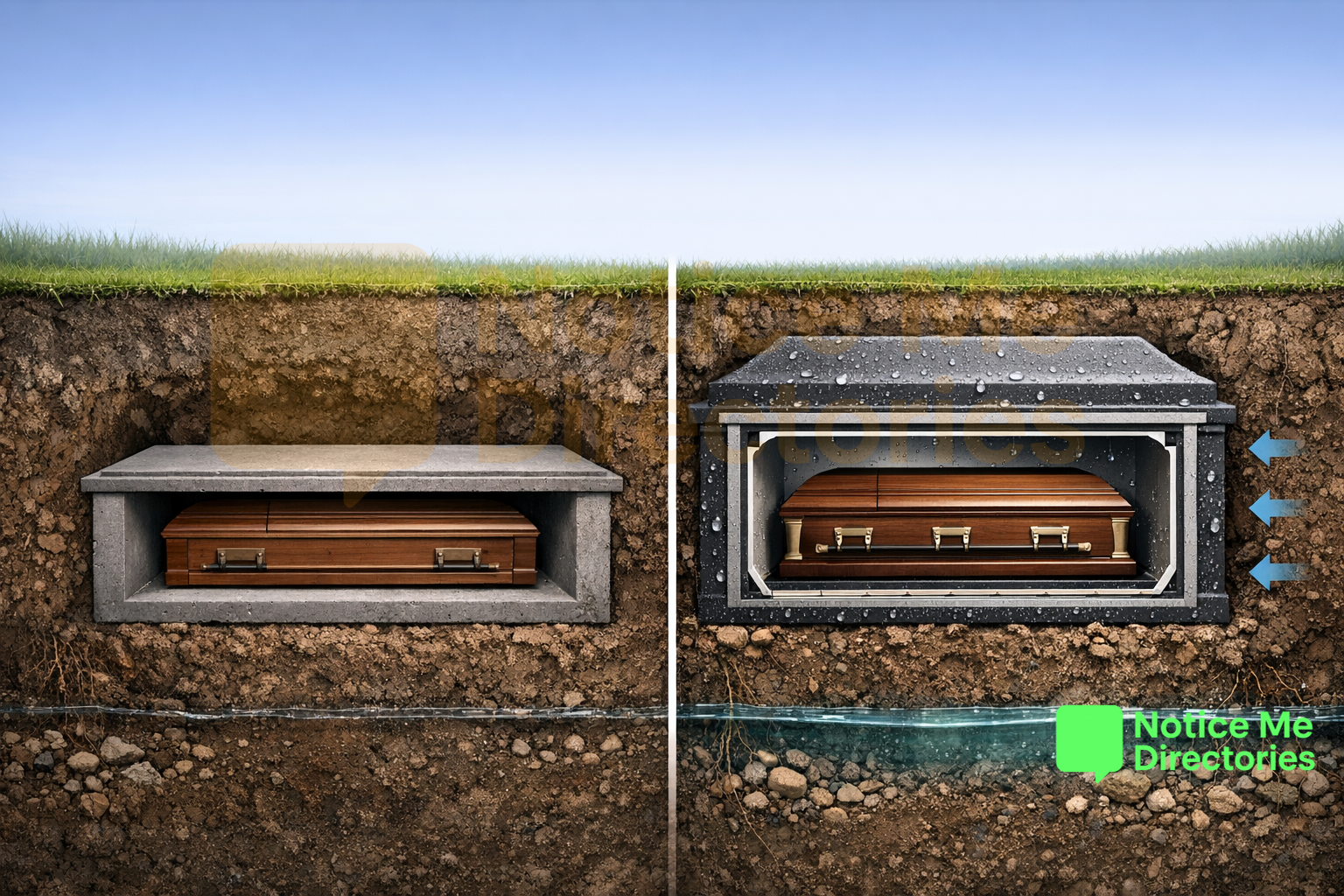
Grave liner vs. sealed protective vault (quick comparison)
Both are “outer burial containers,” but they are built for different outcomes: one satisfies a minimum ground-stability rule, the other aims to provide active protection.
- Typical build: often a concrete box with a lid.
- Main purpose: satisfies the cemetery’s anti-collapse rule.
- Core benefit: helps prevent soil collapse from surface weight and routine maintenance impacts.
- What it does not emphasize: sealing for water resistance and environmental protection.
- Typical build: reinforced, lined, and sealed.
- Main purpose: actively protects the casket.
- Protection focus: water, weight, and underground elements.
- Core benefit: goes beyond anti-collapse by emphasizing protective performance.
What a standard grave liner is designed to do
A standard grave liner is commonly described as a concrete box with a lid—its primary job is structural: meeting a cemetery’s anti-collapse expectation.
Primary purpose
- Meets the cemetery’s anti-collapse rule.
- Supports the ground surface above the burial space.
How to think about it
- Best understood as a ground-stability solution.
- Not positioned as a sealed protective system for environmental exposure.
What a reinforced, lined, and sealed burial vault adds
A sealed protective vault is described as reinforced, lined, and sealed—meaning it’s built not only for structure, but also for protection against common underground pressures and conditions.
Reinforced
- Designed to help handle weight from above-ground forces.
Lined
- Emphasizes an added internal barrier as part of the protective system.
Sealed
- Designed to help protect the casket from water and underground elements.
Questions to ask when you hear “liner” or “vault”
These questions keep the conversation anchored on function: minimum compliance vs. added protection.
About the cemetery’s baseline requirement
- Does the cemetery require an outer burial container for casket burials?
- Is the minimum requirement satisfied by a basic grave liner?
- Is the requirement framed as an anti-collapse rule?
About protection goals
- If we want protection from water, weight, and underground elements, what option is designed for that?
- Is the option described as reinforced, lined, and sealed?
- What is the intended difference in protection between the liner and the sealed vault?
What’s the simplest way to explain the difference?
A basic grave liner is typically positioned as the minimum structure to meet an anti-collapse rule, while a reinforced, lined, and sealed burial vault is positioned to actively protect the casket from water, weight, and underground elements.
Why does this matter when budgeting?
If a cemetery’s minimum requirement can be satisfied by a liner, that sets a baseline. If your goals include environmental protection for the casket, that’s where a sealed protective vault enters the conversation.