Urn Vault Requirements
Cremation can still come with underground structural rules. Many properties require a single-urn or multi-urn vault to help protect smaller urns from ground pressure, soil shifting, and sinking turf.
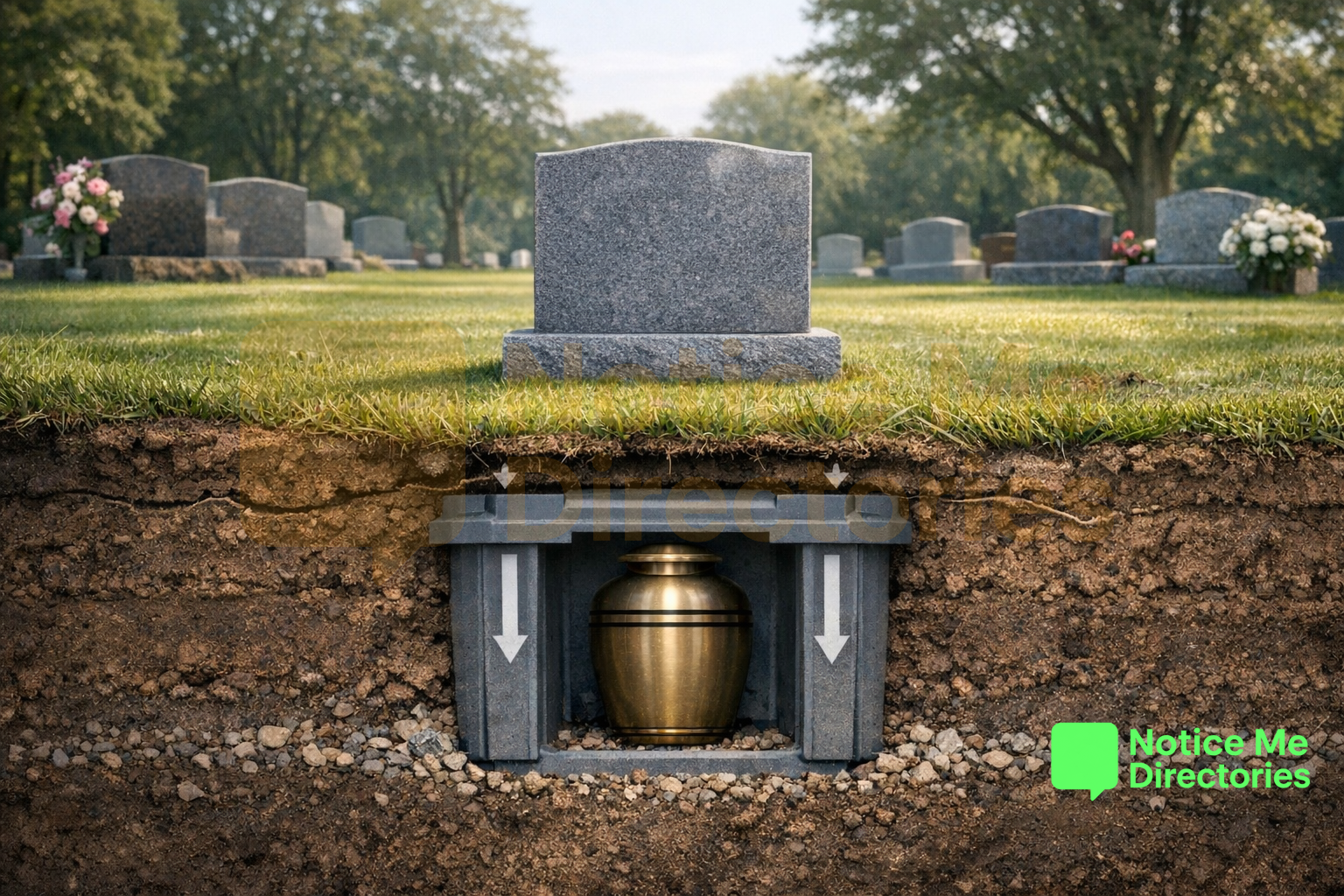
“Cremation means no underground requirements.” Not always.
A frequent surprise: families may assume cremation automatically avoids the structural expectations that apply to casket burials. But properties often still manage the ground surface the same way—especially where turf must remain level and safe.
Why the assumption happens
- Cremated remains are smaller than a casket burial.
- Families may expect a simpler, less regulated burial setup underground.
Why the property may still require a vault
- Smaller containers can be more vulnerable to ground forces.
- Properties aim to prevent uneven surfaces and sinking turf over time.
What urn vault requirements are trying to prevent
Properties often require urn vaults for one practical goal: maintaining stable, level ground while reducing risk to the urn and the burial location over time.
Ground pressure
- Helps protect smaller urns from being affected by pressure from above.
Soil shifting
- Soil can move, settle, and compress—especially over time.
- A vault helps reduce how much shifting impacts the urn and the burial space.
Sinking turf
- Requirements often aim to prevent low spots and uneven turf.
- Stable turf supports ongoing property maintenance and appearance.
A simple process to avoid surprises
Keep the conversation focused on what the property requires and what the vault is intended to protect against.
-
1
Confirm whether a vault is required for cremated remains
Ask directly about the property’s underground rules for urn burials.
-
2
Clarify the type: single-urn or multi-urn
Match the requirement to your plan (one urn vs. multiple urns in one location).
-
3
Ask what problem the requirement is designed to solve
Ground pressure, soil shifting, and sinking turf are common reasons properties cite.
Urn vault FAQs (plain language)
These answers stick to the core issue: why requirements exist for cremated remains and what they’re intended to prevent.
Why would an urn need a vault if it’s small?
Smaller urns can be more affected by ground pressure and soil shifting. Properties often require a vault to protect the urn and help keep the turf from sinking.
Is an urn vault requirement about appearance or safety?
Requirements often connect to keeping the ground stable and level over time, which affects both appearance (preventing sinking turf) and maintenance practicality.
When would a multi-urn vault matter?
When more than one urn is planned for a single protected space, properties may require a multi-urn vault to support that layout and maintain ground stability.