12 Pillars • #10
Foundation Construction Code
Heavy stone monuments demand rigid engineered support. Following uniform subsurface concrete footing specifications prevents tilting, ground displacement, and safety hazards over generations.
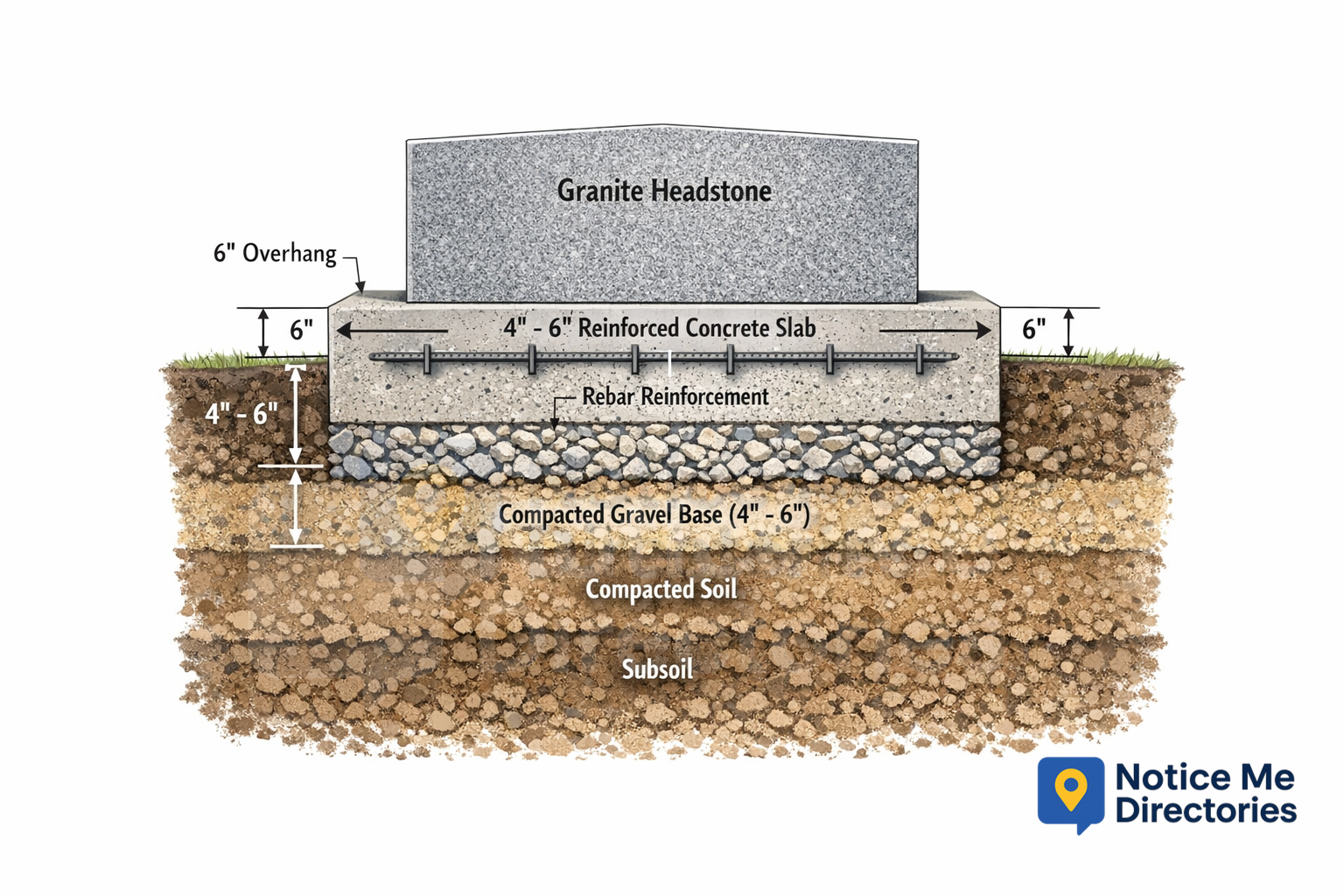
This structural blueprint charts the mandated subsurface relationships between stone weight, steel-reinforced pouring depth, and the critical granular base that counteracts frost heaving and soil shift.
Why Subsurface Foundations Are Required
A modest granite upright headstone can easily weigh between 500 and 1,200 pounds, while large family estate monuments frequently scale past several tons. Placing this immense, concentrated load directly onto raw topsoil inevitably leads to catastrophic failure. Natural earth breathes, moves, holds moisture, and compresses. Without a rigid subsurface footprint, monuments will tilt, tip, sink into the sod, or crack under their own unguided shear stress.
Mandatory Core Slab Specifications
Modern cemetery conservation codes require all stone installations to rest on a poured monolithic base matching these three critical measurements:
4" to 6" Slab Depth
The concrete slab thickness must measure a minimum of 4 to 6 inches of solid pour. This depth creates a heavy ballast block that resists shifting due to frost cycles or standard seasonal changes.
6" Border Overhang
The finished concrete base must extend exactly 6 inches outward past the perimeter of the stone base. This flange distributes the stone's downward force safely across a wider surface area.
Rebar Reinforcement
Industrial steel rebar ties must be embedded internally inside the wet pour. The steel provides critical tensile strength, holding the concrete matrix together even if subsoil settling occurs below.
The Sub-Slab Granular Foundation
Pouring concrete directly over soft, uncompacted dirt invites rapid erosion. Water pooling underneath the stone will slowly wash away fine topsoil particles, creating hidden structural voids that lead to localized base tilting.
To stop this, modern code mandates an under-layer consisting of a **4 to 6-inch compacted gravel base**. This porous aggregate layer acts as an essential drainage field, allowing rain moisture to filter down through the compacted soil and subsoil horizons without threatening the structural level of the concrete slab above.
Protecting Grounds and Maintenance Crews
Enforcing rigorous engineering specs is a matter of long-term cemetery public safety. Slanted or loose stone monuments are high-liability tip hazards for visiting families and field historians.
Additionally, the mandatory 6-inch concrete overhang border serves a vital function for lawn management teams. It creates a flush, level clearance path for commercial riding mowers and trimmer decks. This prevents heavy steel blades from directly striking and marring the historic granite faces.
Questions to Verify Foundation Compliance
Is the foundation fee included in the plot purchase or stone cost?
Cemeteries usually retain exclusive rights to pour concrete monument foundations to ensure uniform compliance. This installation fee is often billed separately from the monument purchase.
What is the curing timeframe before a heavy stone can be safely set?
Newly poured concrete slabs require a designated setting window (typically 14 to 28 days) to achieve the full load-bearing compressive strength required to carry heavy upright monuments.
Are monolithic flush marker foundations poured differently?
Flat lawn stones set flush with the sod line still require an underlying foundation block, though the concrete is poured to sit completely flush with the grass line to facilitate mowing.
These are your neighbors...your community local businesses.
Let us help you find them.